Data privacy has become an important topic as more digital platforms collect and process user information for providing services. Users increasingly want to understand how their personal data is handled and what choices they have when they no longer wish to provide consent. On Playinexch, users exploring digital services should understand the importance of consent management and how India’s Digital Personal Data Protection (DPDP) framework focuses on user control over personal information.
The ability to withdraw consent is an important part of modern privacy practices because it allows individuals to review and change their data-sharing decisions.
What Is Data Consent Under the DPDP Framework?
Consent is the permission given by an individual for an organization to process their personal data for a specific purpose.
Under India’s DPDP framework, consent should generally be:
- Clear
- Informed
- Specific
- Voluntary
- Based on understandable information
Users should know what information is being collected and why it is needed.
When completing a Playinexch Login, users may encounter privacy notices or consent requests explaining how certain information is used to provide digital services.
What Does Withdrawing Data Consent Mean?
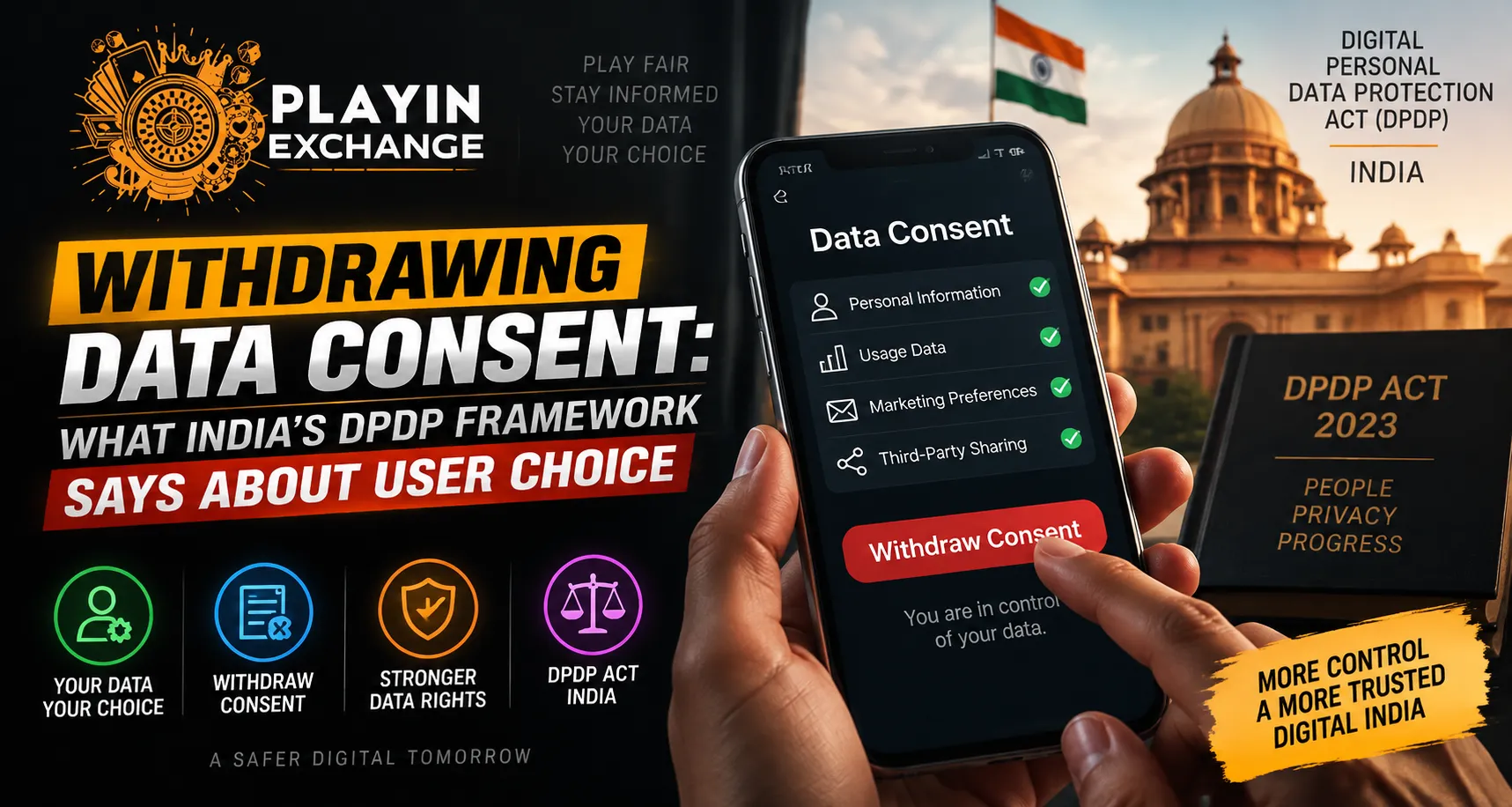
Withdrawing consent means that a user can change their decision and request that future data processing based on that consent should stop.
It gives individuals greater control over their personal information.
Consent withdrawal may apply when users:
- No longer want a particular data use
- Change privacy preferences
- Stop using a service
- Want greater control over personal information
However, withdrawing consent does not always mean that all data is immediately deleted. Different legal requirements may determine whether certain information must be retained.
Why Is User Choice Important in Data Protection?
Modern digital services often rely on personal data for different functions.
Examples may include:
- Account management
- Security checks
- Service improvements
- Communication features
- Personalization
Giving users control over consent creates more transparency between platforms and individuals.
A strong consent system helps users understand:
- What data is collected
- How it is used
- Who may process it
- How choices can be changed
How Can Users Withdraw Consent?
The exact process depends on how a platform manages privacy settings, but generally users should have access to clear options for changing consent preferences.
Typical steps may include:
- Access account privacy settings
- Review current permissions
- Select the relevant consent option
- Submit a withdrawal request
- Receive confirmation of the updated preference
Users accessing services through the Playinexch Apk should review available privacy controls and follow official procedures for managing preferences.
What Happens After Consent Is Withdrawn?
After consent withdrawal, organizations may need to stop processing personal data that depended on that consent.
Possible outcomes may include:
- Certain features becoming unavailable
- Marketing communication being reduced
- Specific data processing activities stopping
- Privacy settings being updated
The impact depends on why the information was collected and whether another lawful basis exists for processing.
Consent Withdrawal Does Not Always Mean Immediate Data Deletion
A common misunderstanding is that withdrawing consent automatically removes all personal information.
In practice, data deletion and consent withdrawal are separate concepts.
Some information may still need to be maintained because of:
- Legal obligations
- Security requirements
- Fraud prevention needs
- Regulatory responsibilities
- Record-keeping requirements
Users should understand that stopping future processing and deleting existing records may involve different procedures.
Role of Data Fiduciaries Under DPDP
The DPDP framework places responsibilities on organizations that determine how and why personal data is processed.
These organizations should provide:
- Clear privacy information
- Consent mechanisms
- Methods to withdraw consent
- Appropriate security measures
- Transparent communication
A responsible approach Helps users make informed choices about their information.
How Users Can Make Better Privacy Decisions
Users can improve control over their personal data by following good privacy practices.
Helpful steps include:
- Reading privacy notices before accepting
- Reviewing permissions regularly
- Removing unnecessary access
- Keeping account details secure
- Understanding available privacy options
When managing a Play Exchange account or other digital services, users should stay aware of what information they choose to share.
Difference Between Consent Withdrawal and Account Closure
These two actions are often confused but serve different purposes.
Consent Withdrawal
- Changes permission for specific data processing
- Focuses on privacy choices
- May not close an account
Account Closure
- Ends access to a service
- May involve additional procedures
- Can trigger data retention processes
A user may withdraw certain permissions while continuing to use other parts of a service.
Why Transparent Privacy Controls Build Trust
Users are more likely to trust digital platforms when they understand how their information is managed.
Clear privacy options help create:
- Better transparency
- Stronger user confidence
- Improved control
- Responsible data practices
For users managing a Playinexch ID, understanding privacy choices helps create better awareness of digital rights and responsibilities.
Importance of Reviewing Data Preferences Regularly
Privacy preferences should not be treated as a one-time decision.
Users may benefit from regularly checking:
- Connected accounts
- App permissions
- Communication preferences
- Data-sharing choices
Digital habits change over time, and reviewing privacy settings helps maintain better control.
Conclusion
India’s DPDP framework highlights the importance of user choice, transparency, and control over personal data. Withdrawing consent allows individuals to change their privacy decisions and manage how their information is processed.
Understanding the difference between consent withdrawal, data deletion, and account changes helps users make informed choices. By reviewing privacy settings and understanding digital rights, users can take a more active role in protecting their personal information.
FAQs
What does withdrawing data consent mean?
Withdrawing data consent means a user changes their decision and requests that future processing based on that consent should stop.
Does withdrawing consent delete all personal data?
No. Consent withdrawal and data deletion are different processes. Some information may need to be retained for legal or security reasons.
Why is consent important under the DPDP framework?
Consent helps ensure that users understand and control how their personal information is collected and processed.
Can users change their privacy choices later?
Yes. Consent systems are designed to allow users to review and update their preferences.
Does withdrawing consent always stop all data processing?
Not necessarily. Processing may continue if another lawful reason allows it.
How can users manage personal data better?
Users can review privacy settings, understand permissions, and regularly check how their information is being used.