
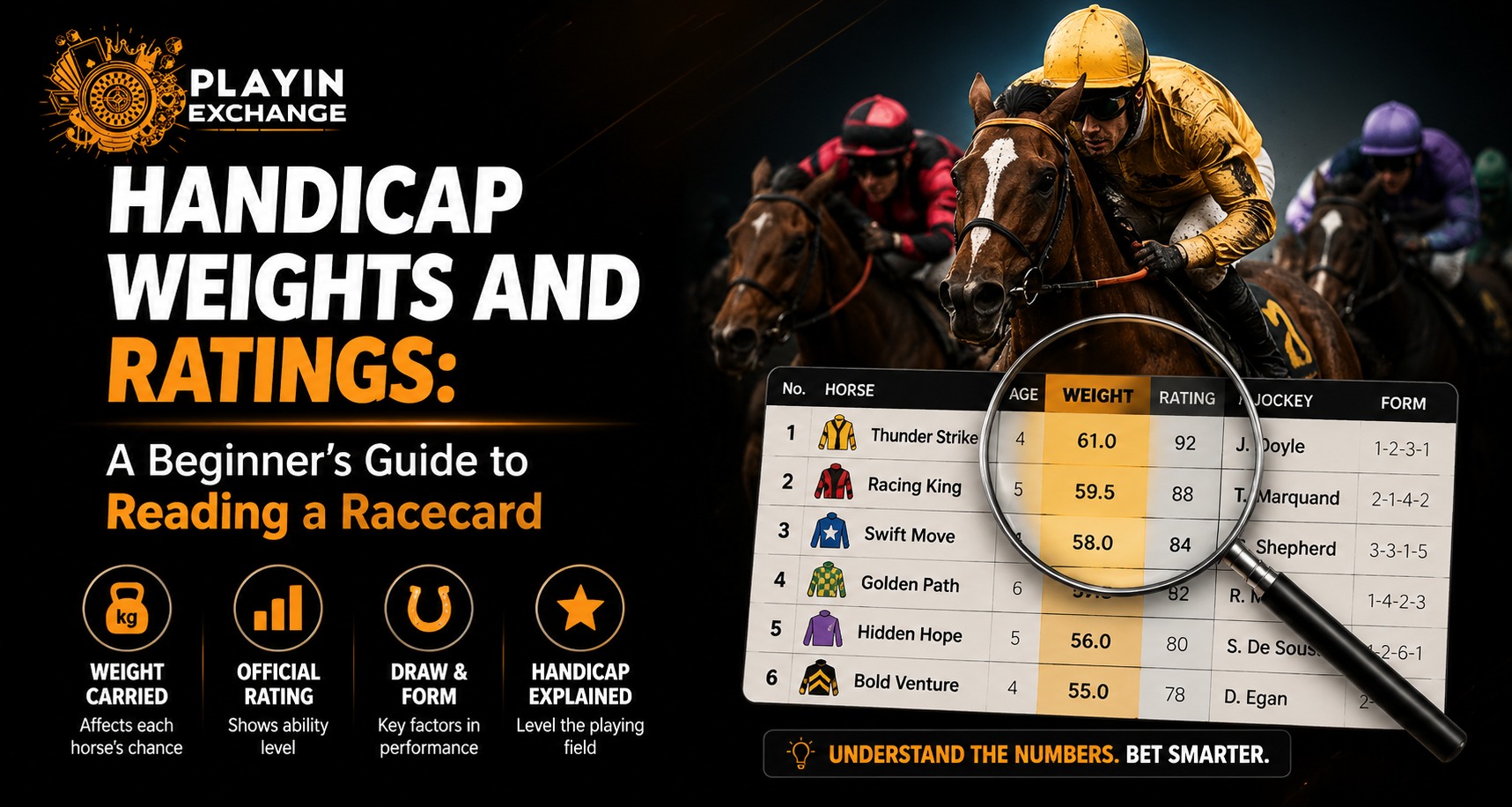
Understanding a horse racing racecard can feel complicated for beginners because it contains many details about horses, jockeys, trainers, ratings, and assigned weights. Learning how these factors work helps fans analyse races more clearly and understand why some horses are considered stronger contenders than others. Playinexch provides sports-focused information that helps users understand different aspects of racing markets and important terms used in race analysis.
Two of the most important factors shown on a racecard are handicap weights and official ratings. These details help explain how horses are matched against each other and why some runners carry more weight than others.
What Is a Racecard?
A racecard is a detailed guide that provides information about a scheduled horse race. It helps followers understand the background of each horse before the event begins.
A typical racecard includes:
- Horse name
- Age and experience
- Trainer details
- Jockey information
- Previous performances
- Official rating
- Assigned weight
- Recent form
By studying these details, users can gain a better understanding of the race conditions and the challenges each horse may face.
Understanding Handicap Racing
Handicap racing is designed to create a more balanced competition by assigning different weights to horses based on their ability.
The basic idea is:
- Stronger horses carry more weight
- Lower-rated horses carry less weight
- The weight difference aims to create a closer contest
The handicap system gives every horse a better chance by adjusting the physical burden each runner carries during the race.
What Are Handicap Weights?
Handicap weight is the total weight a horse must carry during a race. It usually includes:
- Jockey weight
- Saddle equipment
- Additional assigned weight
A horse with a higher rating generally receives a higher handicap weight because it is considered more capable based on previous performances.
For example:
- Horse A has a higher rating and carries 60 kg.
- Horse B has a lower rating and carries 55 kg.
The additional weight is intended to balance their chances.
How Official Ratings Work
An official rating represents an assessment of a horse’s ability based on previous race performances.
Ratings are influenced by factors such as:
- Race results
- Quality of competition
- Winning margins
- Speed performances
- Consistency
A higher-rated horse has usually demonstrated stronger performances, but it does not guarantee future success because race conditions can change.
Why Weight Matters in Horse Racing
Weight can have a significant impact, especially over longer distances. Carrying extra weight requires more effort from the horse and may affect stamina.
Important considerations include:
- Race distance
- Track condition
- Horse fitness
- Previous weight carried
- Running style
A small weight difference may have little impact in short races but become more important over longer distances.
How to Read Handicap Information on a Racecard
Beginners should look at several sections together instead of focusing on only one number.
Key areas to review include:
Horse Rating
Check whether the horse has performed well against similar competition.
Assigned Weight
Compare the weight with other runners in the same race.
Recent Form
Look at previous finishing positions and consistency.
Distance Record
A horse that performs well over the same distance may have an advantage.
Track Conditions
Some horses perform better on specific surfaces or weather conditions.
Common Mistakes Beginners Make
New race followers often focus only on the highest-rated horse. However, handicap racing is designed to create competitive balance.
Common mistakes include:
- Ignoring weight differences
- Looking only at past wins
- Not considering race distance
- Forgetting track conditions
- Overvaluing ratings without context
A complete analysis requires understanding how different factors work together.
How Technology Helps With Race Analysis
Modern platforms provide easier access to racing information, allowing users to review racecards, statistics, and market details more efficiently.
Users accessing information after Playinexch Login can explore racing-related details and understand how different factors influence race expectations.
Digital tools can help organise information such as:
- Previous race records
- Horse statistics
- Performance trends
- Market movements
Understanding Race Markets Through Playinexch Features
Horse racing analysis involves many elements, and understanding racecards is an important starting point. Through features available with Playinexch Apk, users can access racing information and improve their knowledge of different market terms.
Whether learning about handicap systems, ratings, or race conditions, having a clear understanding of the basics Helps users follow races more confidently.
The Role of Play Exchange in Racecard Understanding
Racecards provide the foundation for analysing horses before a race. By understanding handicap weights and ratings, users can better interpret why certain horses receive different assessments.
A well-informed approach focuses on research, race conditions, and available information rather than relying on a single factor.
Conclusion
Handicap weights and ratings are two of the most important parts of understanding a horse racing racecard. They explain how horses are assessed and why different runners carry different weights during a race.
For beginners, learning these concepts creates a stronger foundation for following horse racing. By reviewing ratings, weights, form, distance, and conditions together, fans can develop a clearer understanding of race analysis.
FAQs
What is a handicap weight in horse racing?
A handicap weight is the assigned weight a horse must carry during a race based on its rating and ability.
Why do stronger horses carry more weight?
Stronger horses receive higher weights to create a more balanced competition between different ability levels.
What does a horse rating mean?
A horse rating represents an assessment of its ability based on previous performances and race results.
Does a higher rating mean a horse will always win?
No. A higher rating shows past ability, but race conditions, fitness, distance, and weight can affect the result.
How important is weight in horse racing?
Weight can influence performance, especially in longer races where stamina becomes more important.
What should beginners check on a racecard?
Beginners should review ratings, weights, recent form, distance records, and track conditions before analysing a race.