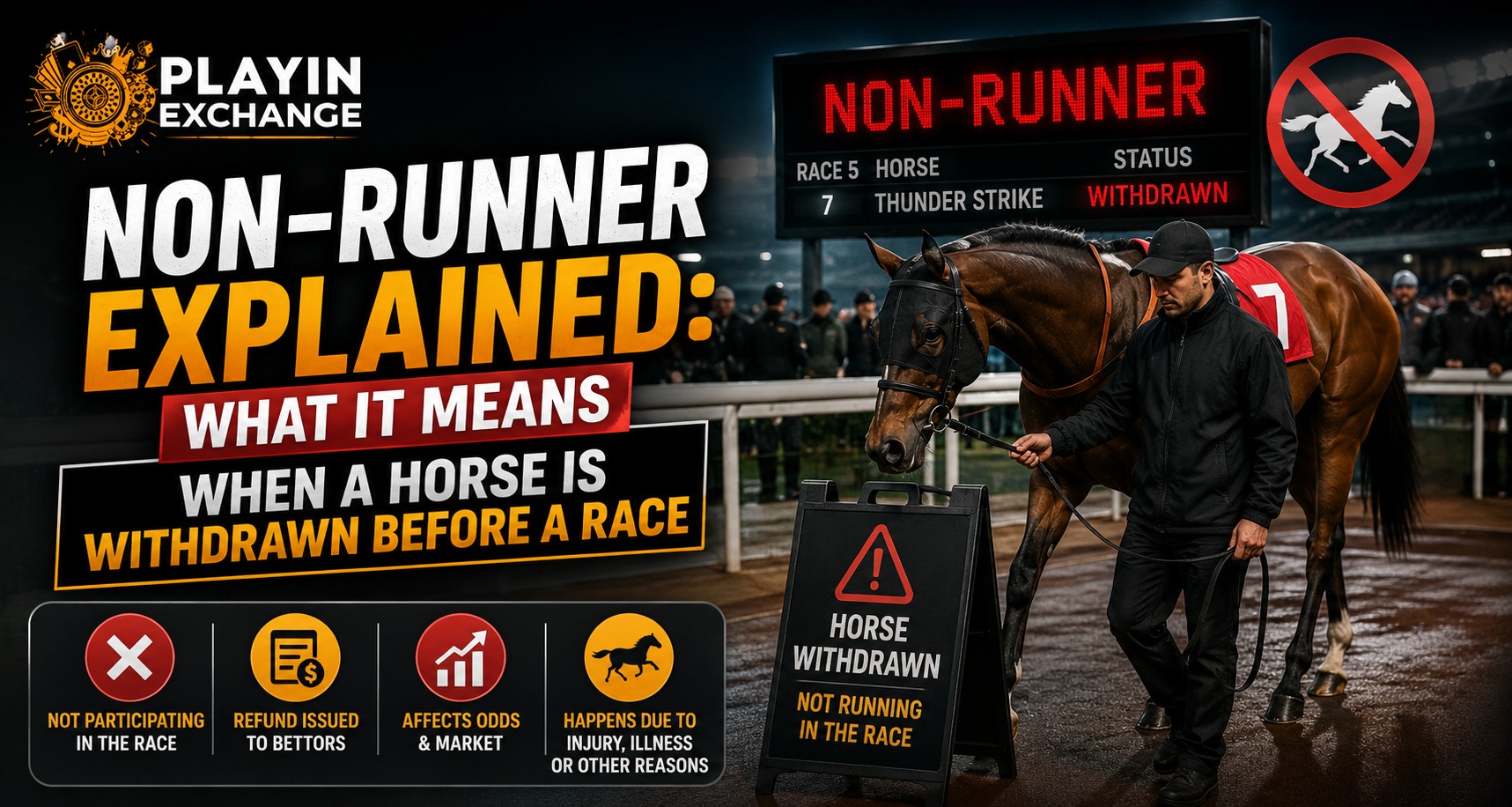
Horse racing markets include several terms that beginners need to understand before following events and race information. One of the most common terms is “non-runner,” which refers to a horse that is withdrawn before the race officially begins. For users exploring racing updates through Playinexch, understanding this term helps explain why certain selections disappear from markets and how race conditions can change before the start.
What Is a Non-Runner in Horse Racing?
A non-runner is a horse that was originally entered or expected to participate in a race but is withdrawn before the event starts.
Once a horse becomes a non-runner:
- It does not take part in the race.
- Any market involving that horse is usually adjusted.
- Race conditions may change depending on the number of remaining runners.
- Betting rules may apply differently depending on the market.
Withdrawals are common in horse racing and can happen for several reasons, including health concerns, track conditions, or trainer decisions.
Why Are Horses Withdrawn Before a Race?
A horse may be removed from a race for many different reasons. Trainers and owners must consider the horse’s condition and whether competing is the right decision.
Common reasons include:
- Injury or physical concerns
- Illness before the event
- Unsuitable weather or track conditions
- Travel issues
- Tactical decisions by trainers
- Horse not meeting final race requirements
The decision to withdraw is usually made to protect the horse’s wellbeing or improve future racing opportunities.
How Does a Non-Runner Affect a Race Market?
When a horse is withdrawn, the market changes because the original number of competitors is reduced.
A non-runner can affect:
- Available prices
- Market structure
- Place terms
- Competition level
- Expected race strategy
For example, if a leading contender is withdrawn, other horses may become more attractive because the competition has changed.
Users checking racing details through Playinexch Login should always review updated market information after any withdrawal announcement.
What Happens to a Selection When It Becomes a Non-Runner?
When a chosen horse becomes a non-runner, the outcome depends on the specific market rules.
Generally:
- The withdrawn horse is removed from the race.
- Any unmatched positions involving that horse may be cancelled.
- Matched selections may be handled according to market settlement rules.
- Updated prices may appear for remaining runners.
Because rules can vary between markets, checking the terms before participating is important.
How Do Non-Runners Affect Place Markets?
Place markets can be particularly affected by withdrawals because the number of runners may change.
For example:
- A race with many runners may offer multiple place positions.
- A smaller field after withdrawals may have different place conditions.
- Market adjustments may occur after the final number of runners is confirmed.
This is why understanding race rules is important before analysing place opportunities.
Why Do Beginners Need to Understand Non-Runners?
Many new followers focus only on horse names and prices without checking whether all listed runners are still participating.
Understanding non-runners helps beginners:
- Follow updated race information
- Understand market changes
- Avoid confusion after withdrawals
- Read race conditions correctly
- Recognize why prices move suddenly
For users accessing information through the Playinexch App, keeping track of race updates can make market analysis easier.
What Happens If a Favourite Becomes a Non-Runner?
A withdrawal of a favourite can significantly change the race.
Possible effects include:
- Other horses becoming more competitive
- Price movements across the market
- Different race strategies
- Changes in expected outcomes
Trainers and jockeys may also adjust their approach because the strongest competitor is no longer involved.
Difference Between Non-Runner and Late Scratching
Although these terms are sometimes used similarly, there can be differences depending on racing terminology.
A non-runner generally refers to any horse withdrawn before the race begins.
A late scratching usually refers to a withdrawal close to the start time.
Both situations mean the horse will not participate, but timing can influence how markets are adjusted.
How Can Fans Track Withdrawals Properly?
Before following any race, it is useful to check:
- Official race announcements
- Final runner lists
- Updated market conditions
- Weather reports
- Trainer comments
Reliable information Helps followers understand why race markets change.
Users exploring racing discussions through Play Exchange should remember that withdrawals are a normal part of horse racing rather than an unusual event.
How Non-Runners Influence Race Strategy
A horse withdrawal can change how jockeys approach a race. The pace, positioning, and tactical decisions may all be affected when a major competitor leaves the field.
For example:
- Front-running horses may face different pressure.
- Smaller fields can create different racing patterns.
- Trainers may change strategies based on remaining opponents.
For followers using a Playinexch ID, understanding these changes provides better context when reviewing race information.
Conclusion
A non-runner is simply a horse that has been withdrawn before a race begins. While it may seem like a small update, it can have a major impact on race markets, place conditions, and overall strategy.
For anyone using a Playinexch Online ID or following horse racing information, understanding non-runner rules makes it easier to interpret market changes and follow events more confidently. Always check updated race details because withdrawals can happen at any stage before the starting signal.
Frequently Asked Questions
What does non-runner mean in horse racing?
A non-runner is a horse that was entered for a race but withdrawn before the event starts.
Why do horses become non-runners?
Horses may be withdrawn because of injury, illness, unsuitable conditions, or trainer decisions.
Does a non-runner participate in the race?
No. A non-runner does not take part once officially withdrawn.
Can a favourite become a non-runner?
Yes. Even leading horses can be withdrawn before a race.
Do non-runners affect race markets?
Yes. Withdrawals can change prices, competition levels, and market conditions.
Should beginners check non-runner updates?
Yes. Updated runner information helps avoid confusion and improves understanding of race markets.