
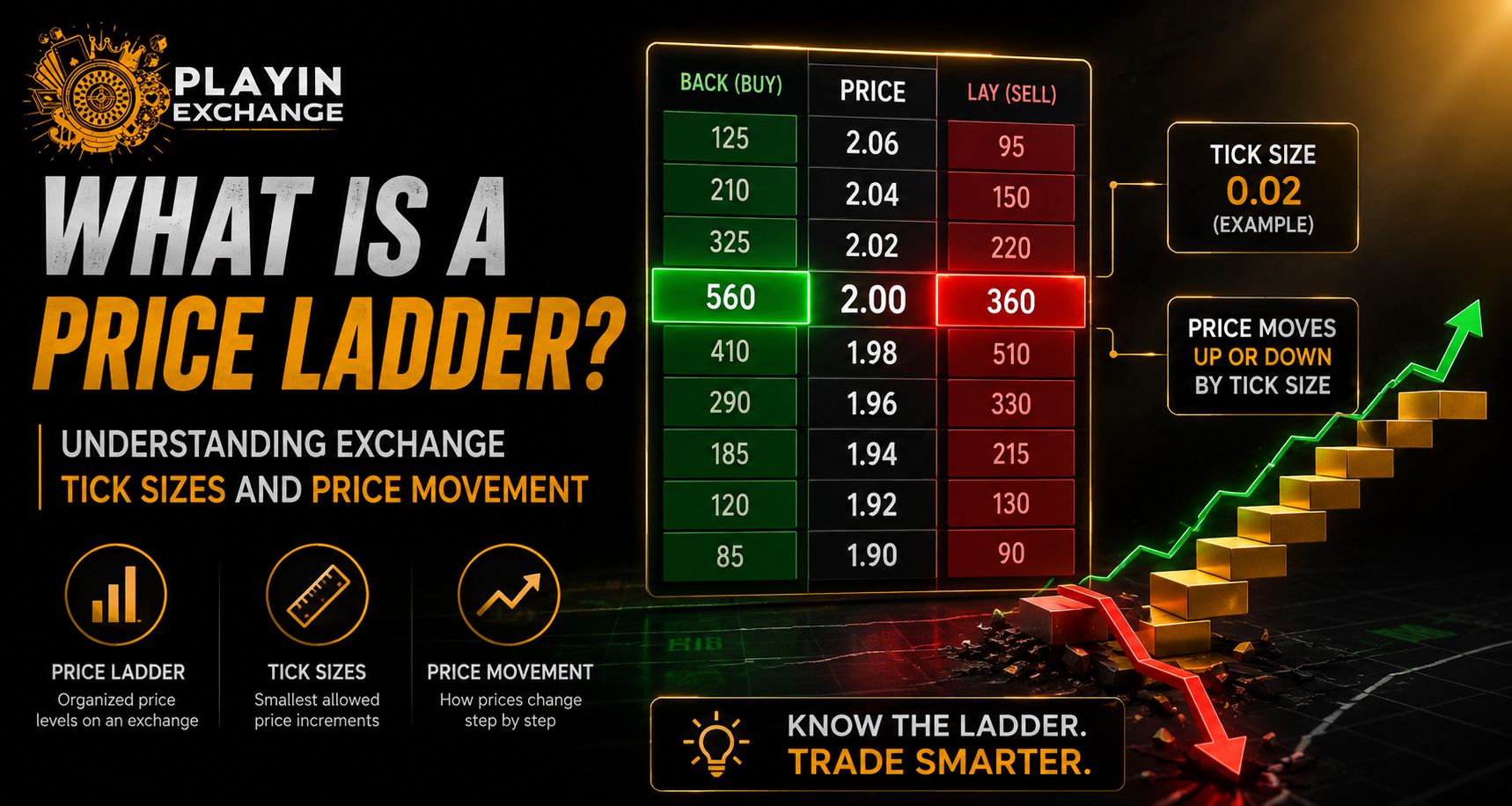
Understanding how prices move in exchange markets is important for anyone who wants to follow market activity more clearly. A price ladder is one of the most useful tools for viewing available prices, market depth, and movement patterns. In the middle of discussions around exchange-based platforms, Playinexch explains how price ladders work and why understanding tick sizes helps users interpret market changes more effectively.
A price ladder provides a structured view of different price levels available in a market. Instead of showing only one current price, it displays multiple levels where buying and selling activity can take place.
What Is a Price Ladder?
A price ladder is a display format that shows price levels in an organised vertical structure. It allows users to see how prices change and where market activity is concentrated.
A typical price ladder includes:
- Available prices
- Current market position
- Price movement direction
- Available volume or activity
- Difference between price levels
This format helps users understand market behaviour instead of looking at isolated price numbers.
Understanding Exchange Tick Sizes
Tick size refers to the minimum amount by which a price can move in an exchange market. Every market has specific rules about how prices increase or decrease.
For example, if a market uses a tick size of 0.01, prices may move like:
- 2.00
- 2.01
- 2.02
- 2.03
The tick size determines the smallest possible movement between two price points.
Why Tick Sizes Matter
Tick sizes create structure within exchange markets. Without fixed movement intervals, prices would become difficult to organise and compare.
Important reasons tick sizes matter include:
- Maintaining consistent price movement
- Improving market organisation
- Helping users compare available options
- Creating a standard trading environment
Understanding tick sizes makes it easier to interpret how prices shift during market activity.
How Price Movement Works on a Ladder
A price ladder shows movement by displaying prices moving upward or downward depending on market conditions.
Price changes can happen because of:
- New information entering the market
- Changes in demand and supply
- Increased activity from participants
- External events affecting expectations
For example, if more users believe a particular outcome is becoming likely, available prices may adjust based on increased demand.
Reading a Price Ladder Correctly
A price ladder may look complicated at first, but understanding the basic sections makes it easier to follow.
Most ladders contain:
Current Price Area
This shows the prices currently available in the market. It represents the latest position where activity is taking place.
Higher Price Levels
These levels show prices above the current market position. They represent possible movement if demand changes.
Lower Price Levels
These levels show prices below the current position and indicate different market possibilities.
Market Depth Information
Some ladders display additional information about available volume at each price level, helping users understand activity around different points.
The Relationship Between Price and Market Activity
Price movement is directly connected to market activity. When more participants enter or leave a market, prices can adjust to reflect changing expectations.
Factors affecting movement include:
- New developments
- Performance updates
- Market sentiment
- Timing of events
- Changes in available information
A price ladder helps users observe these changes in real time.
Why Exchange Markets Use Price Ladders
Exchange markets require transparent information because multiple participants interact with the same market. A price ladder provides a clear way to view available prices and understand how movement occurs.
Benefits include:
- Better market visibility
- Easier comparison between price levels
- Improved understanding of movement
- More organised information display
Users accessing platforms through Playinexch Login can better understand exchange activity by learning how these tools represent market changes.
Price Ladders in Live Market Environments
Live markets can experience rapid price movement because situations change continuously. During live events, prices may shift quickly after important moments.
Examples include:
- A major match event
- A sudden performance change
- New information becoming available
- Changing participant expectations
Because of this speed, understanding tick sizes and price ladders becomes even more valuable.
How Beginners Can Learn Price Movement
New users should focus on understanding basic concepts before analysing complex market activity.
Helpful steps include:
- Learning how prices are displayed
- Understanding tick size rules
- Observing movement patterns
- Comparing different price levels
- Following market changes over time
A structured approach helps users build confidence when reading exchange information.
Technology Behind Modern Exchange Displays
Modern exchange platforms use advanced technology to present market information quickly and accurately. Real-time data processing allows users to view changing prices and available market activity.
Features commonly supported include:
- Fast updates
- Clear market displays
- Mobile accessibility
- Account-based tracking
The Play Exchange ecosystem reflects how digital platforms continue improving access to organised market information.
Importance of Understanding Price Movement
Knowing how price ladders work provides a better understanding of how exchange markets operate. Instead of focusing only on a single number, users can observe the broader market picture.
A price ladder shows:
- Where prices currently stand
- How movement occurs
- How small changes develop
- How market activity influences prices
This knowledge can Help users make more informed observations.
Conclusion
A price ladder is an important tool for understanding exchange tick sizes and price movement. It provides a detailed view of available prices, market activity, and changing conditions.
By learning how tick sizes work and how prices move, users can better understand exchange structures and follow market developments more effectively. Whether exploring features through a Playinexch ID or reviewing market information through digital platforms, understanding price ladders creates a clearer view of how exchange systems function.
FAQs
What is a price ladder?
A price ladder is a display that shows multiple price levels and helps users understand market movement and available options.
What does tick size mean?
Tick size is the smallest amount by which a market price can increase or decrease.
Why do exchange markets use tick sizes?
Tick sizes create organised price movement and ensure consistency across market activity.
How does a price ladder show movement?
A price ladder shows different price levels, allowing users to observe whether prices are moving higher or lower.
Can beginners understand price ladders?
Yes, beginners can understand them by learning basic concepts like price levels, tick sizes, and market activity.
What is a Playinexch Online ID used for?
A Playinexch Online ID provides access to platform features and helps users manage their account-related activities.