
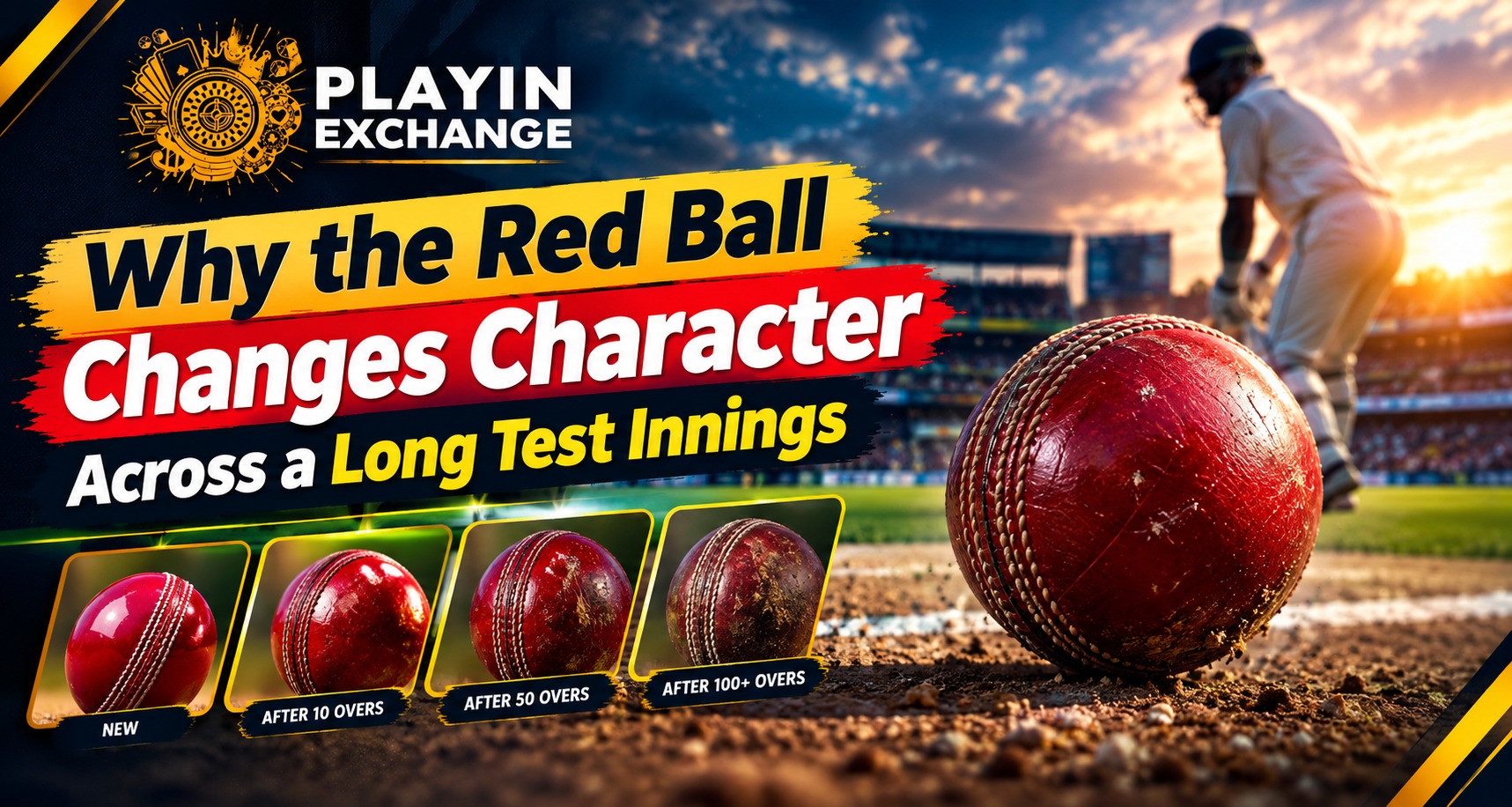
Test cricket is unique because the same red ball can remain in play for a long period, gradually changing as it travels from bowler to batter and back to the fielding side. For cricket followers exploring the technical side of the longest format, Playinexch can be one of many platforms where match-related information is followed. Understanding how the ball evolves helps explain why a Test match can produce very different bowling and batting conditions across the same innings.
A new red ball and an older red ball can behave quite differently. Its shine, seam, hardness, surface texture, and ability to move through the air can all change with use.
What Happens to a New Red Ball?
At the beginning of a Test innings, the ball is relatively hard and its seam is clearly defined. This gives fast bowlers several potential advantages.
The early phase can offer:
- Conventional swing through the air
- Movement from the seam
- Extra bounce from a harder ball
- A pronounced seam for bowlers to target
- Greater difficulty for batters judging movement
The exact amount of assistance depends on conditions. Pitch characteristics, weather, humidity, wind, and the type of ball being used all influence how it behaves.
Under the Laws of Cricket, the umpires retain control of the match ball, while a new ball is used at the start of each innings. In Tests, the fielding captain can demand another new ball once the existing ball has reached 80 overs.
How Does the Ball Change During an Innings?
Every delivery contributes to the gradual wear of the ball. It repeatedly hits the pitch, bat, pads, gloves, and sometimes the outfield.
Over time, this can alter several physical characteristics.
1. The Shine Fades
A new ball has a prominent polished surface. Fielders are permitted to polish the ball on their clothing using sweat, provided no artificial substance is used.
As one side retains more shine than the other, the ball can develop an uneven surface. Bowlers may attempt to maintain legal differences between the two sides through normal polishing.
2. The Seam Becomes Less Pronounced
The seam is an important tool for fast bowlers, particularly when the ball is new.
Repeated impacts gradually wear the seam. As it becomes less prominent, conventional seam movement can become less pronounced, although the amount of movement varies significantly according to conditions and the individual bowler.
3. The Ball Loses Some of Its Hardness
A red ball becomes softer as it accumulates overs. ICC material has noted that the red ball becomes softer as a game progresses, which can require players to adjust their approach.
This changing hardness can influence pace, bounce, and how the ball comes off the bat.
Why Can an Older Ball Behave Differently?
The older ball can create a different type of challenge from the new ball.
Early in an innings, fast bowlers may focus on conventional swing and seam movement. Later, bowlers may rely more heavily on accuracy, variations in pace, changes of angle, and movement created by the condition of the ball.
An older ball may also behave differently when it reaches the pitch. The amount of bounce and deviation can change, requiring batters to constantly reassess their shot selection.
What Is Reverse Swing?
Reverse swing is one of the most fascinating aspects of an older cricket ball.
When conditions are suitable, a sufficiently worn ball can move through the air in a direction different from the conventional swing expected from a newer ball. Bowlers capable of generating reverse swing can therefore become dangerous even after the initial new-ball period has passed.
However, reverse swing is not guaranteed simply because a ball is old.
It depends on factors such as:
- Ball condition
- Seam position
- Bowling speed
- Air conditions
- Pitch conditions
- How the ball is maintained
- The bowler’s technique
Therefore, an old ball should not automatically be assumed to reverse swing.
Why Does the Ball Matter So Much to Batters?
Batting in Test cricket requires continuous adaptation.
A batter may face one set of challenges during the first 10 overs and an entirely different situation much later in the innings.
With a new ball, the batter may concentrate on:
- Leaving balls outside the off stump
- Watching the seam closely
- Playing late
- Protecting the stumps
- Managing conventional movement
As the ball ages, the priorities can change. The batter may become more comfortable with reduced seam movement but still need to account for changes in bounce, pace, and potential reverse swing.
The Role of Pitch and Weather
The ball never operates independently of its surroundings.
A green or grass-covered pitch can provide more seam assistance, while dry surfaces can eventually bring spin into greater prominence. Humid conditions can also influence swing, while a wet outfield can affect how the ball is maintained.
This is why two red balls of a similar age can behave very differently in different Test matches.
The ICC’s playing conditions require umpires to inspect the ball regularly and to intervene if its condition has been unfairly changed.
Why Is the 80-Over New Ball Important?
The 80-over point can create a major tactical moment.
Once the old ball has reached at least 80 overs, the fielding captain can request a new ball under the Test playing conditions.
This can dramatically alter the contest.
A new ball brings back a harder surface and a more prominent seam, potentially giving fast bowlers a fresh opportunity to attack established batters.
For a batting side that has survived a long period against an older ball, the arrival of a new one can therefore represent a completely different challenge.
Can Players Change the Ball’s Condition?
Players are not allowed to deliberately alter the condition of the match ball.
The rules allow certain normal actions, such as polishing with clothing and sweat, while removing mud under umpire supervision. Deliberately changing the ball’s condition outside permitted actions is an offence.
This distinction is important because the natural deterioration of a ball is a fundamental part of Test cricket, while deliberately manipulating it is treated differently under the playing conditions.
Final Thoughts
The red ball is one of the reasons Test cricket evolves so dramatically over several sessions. It starts hard and relatively new, gradually loses shine and seam definition, becomes softer, and can potentially develop different movement characteristics as it ages.
That progression forces both batters and bowlers to adapt. A new-ball spell, a middle-session period with an older ball, and the arrival of a replacement after 80 overs can feel like three different phases of the same innings.
For anyone following Test cricket through a Playinexch Login or another cricket information service, understanding ball deterioration adds another layer to reading the game and appreciating the tactical decisions made by players and captains.
FAQs
Why does a red cricket ball change during a Test innings?
The ball repeatedly hits the bat, pitch, players, and ground. This gradually affects its shine, seam, hardness, and surface condition.
Does an old red ball always reverse swing?
No. Reverse swing depends on several factors, including ball condition, bowling speed, seam position, atmospheric conditions, and technique.
When can a new ball be taken in Test cricket?
Under the ICC Test playing conditions, the fielding captain can demand a new ball after the existing ball has been used for at least 80 overs.
Why is the new ball difficult for batters?
A new ball is harder and generally has a more prominent seam. Depending on conditions, it can provide fast bowlers with swing, seam movement, and useful bounce.
Can cricketers deliberately change the ball’s condition?
Players cannot deliberately alter the ball’s condition outside actions specifically permitted by the Laws and playing conditions. Umpires regularly inspect the ball.
Does the pitch affect how the red ball behaves?
Yes. Pitch conditions can influence seam movement, bounce, grip, and the overall effectiveness of different bowling styles. Weather and humidity can also affect the ball’s movement through the air.