
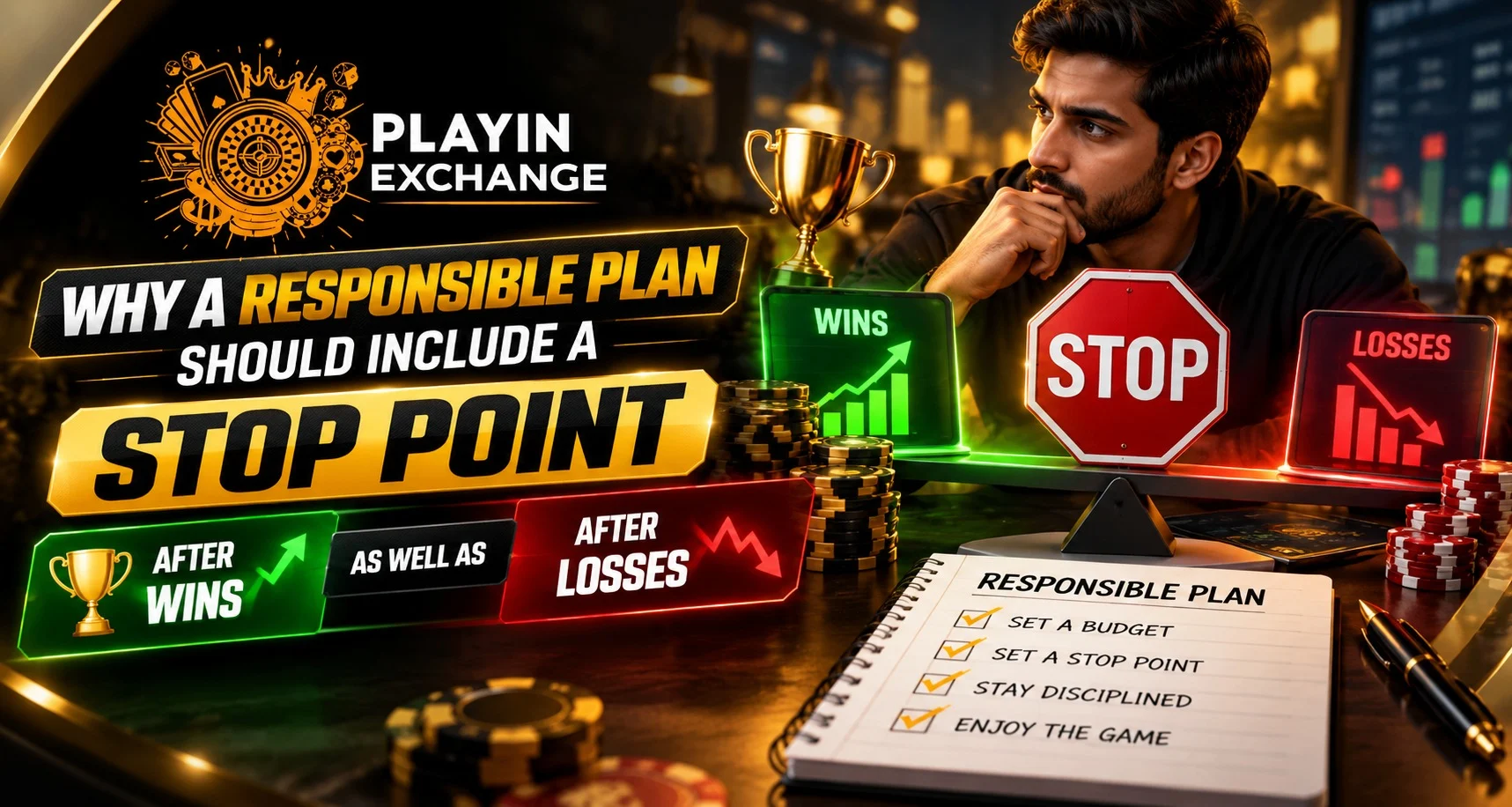
Responsible participation is often discussed in terms of stopping after losses, but setting a clear stop point after a win can be equally useful. For Playinexch users, a planned stopping point can help prevent a successful session from turning into a longer, less controlled one.
Winning can create excitement and confidence, while losing can produce frustration or the desire to recover money quickly. Both emotional states can influence decision-making. A responsible plan should therefore account for both situations rather than focusing only on losses.
Why Stop Points Matter
A stop point is a predetermined condition that tells you when to end a session.
It can be based on:
- A spending limit
- A time limit
- A predefined session goal
- A personal comfort level
- A maximum number of rounds
- A decision to stop after a particular outcome
The important feature is that the decision is made before emotions become intense.
Why Stopping After a Loss Is Important
Losses can create pressure to continue.
A person may think:
- “I can recover this.”
- “The next result could change everything.”
- “I should try one more time.”
- “I was close to winning.”
These thoughts can lead to chasing losses, where additional money or time is used in an attempt to reverse an earlier result.
A predetermined loss limit can create a clear boundary and reduce the temptation to continue simply because the previous result was disappointing.
Why Winning Can Also Become Risky
Stopping after a win may seem unnecessary, but success can create its own emotional pressure.
After a positive result, someone may feel more confident and believe they can continue achieving similar results. This can encourage longer sessions or larger decisions.
The problem is that a previous win does not guarantee another win.
A sensible stop point can help preserve the original plan instead of allowing excitement to determine what happens next.
Also Read: 25 Questions New Playinexch Users Ask – Answered Simply
The Difference Between a Win Target and a Stop Point
A win target is a predetermined point at which a person decides to finish after reaching a positive result.
A stop point is broader and can apply regardless of whether the session is positive or negative.
For example:
- Stop after reaching a predefined positive limit.
- Stop after reaching a predefined loss limit.
- Stop when the planned session time ends.
- Stop when concentration begins to decline.
Using several boundaries can create a more structured approach.
Why Emotions Can Change After a Win
A successful result can change how a person evaluates risk.
Confidence may increase, and a previously cautious approach can become more aggressive. Someone might start thinking about increasing amounts or extending the session.
This is why a stop point should not depend entirely on how confident someone feels at the moment.
The purpose of planning is to create a decision before emotions influence the next action.
Why Time Limits Should Be Part of the Plan
Money is not the only resource that should have a limit.
Long sessions can contribute to:
- Fatigue
- Reduced concentration
- Impulsive decisions
- Emotional reactions
- Difficulty recognizing when to stop
A simple time limit can prevent a short entertainment session from becoming much longer than originally intended.
Build a Two-Sided Stop Plan
A practical responsible plan can include separate boundaries for positive and negative outcomes.
Positive Stop Point
Decide in advance when a successful session should end.
Negative Stop Point
Set the maximum amount you are prepared to lose and stop when that limit is reached.
Time Stop Point
Choose the maximum amount of time you intend to spend.
Emotional Stop Point
Stop if you notice that decisions are becoming driven by anger, excitement, frustration, or pressure.
Having several boundaries can make the plan easier to follow.
Why Chasing Wins Can Be a Problem
Chasing is usually associated with losses, but constantly trying to extend a winning session can also create problems.
A person may continue because they feel that stopping means missing another opportunity.
This mindset can turn a controlled session into an open-ended one.
Instead of asking, “How much more can I make?”, a better question is whether continuing still fits the original plan.
Using a Stop Point With a Playinexch Login
Before using a Playinexch Login, users can decide their personal limits rather than making those decisions during an active session.
A simple checklist can include:
- Maximum spending amount
- Maximum session duration
- Positive stop point
- Loss stop point
- Break schedule
- Conditions for ending the session
Writing these limits down can make them easier to remember when emotions are high.
Removing Easy Access Can Help
Convenience can make it easier to continue without thinking.
After deciding to stop, consider creating some distance from the platform by:
- Closing the session
- Taking a break from the device
- Turning off unnecessary notifications
- Moving to another activity
- Avoiding immediate re-entry
For mobile users accessing the Playinexch Apk, taking a deliberate break from the device can be particularly useful when the temptation to continue feels strong.
A Stop Point Is Not a Prediction Tool
A stop point should not be based on predicting what will happen next.
It is a personal control mechanism.
For example, reaching a positive limit does not mean the next outcome will be negative. Likewise, reaching a loss limit does not mean a recovery is guaranteed if you continue.
The purpose is simply to maintain control over time, spending, and participation.
Review Your Plan Regularly
A responsible plan should be reviewed occasionally.
Ask yourself:
- Did I follow my limits?
- Did I continue after reaching a stop point?
- Did emotions influence my decisions?
- Was the session longer than planned?
- Did I feel pressure to recover losses?
- Did winning make me continue unnecessarily?
Honest answers can help identify patterns that need attention.
Conclusion
A responsible plan should cover both sides of a session. Stopping after a loss can help prevent chasing, while stopping after a win can prevent excitement and confidence from turning a controlled session into an unnecessarily long one.
For users checking Playinexch ID information or managing their account, the most useful principle is simple: decide your limits before starting, not while emotions are influencing the next decision.
A clear combination of spending, time, positive, negative, and emotional stop points can create stronger boundaries and encourage more deliberate participation.
FAQs
Why should I stop after a win?
A win can increase confidence and encourage longer sessions. A predetermined stop point can help prevent excitement from changing your original plan.
Should I have a loss limit?
Yes. A predefined loss limit can help reduce the temptation to chase losses or continue beyond your intended budget.
Can a stop point be based on time?
Yes. A time limit can help prevent sessions from becoming longer than originally planned.
What is an emotional stop point?
It is a personal rule to end a session when emotions such as frustration, excitement, anger, or pressure begin affecting your decisions.
Does winning mean I should continue?
No. A previous win does not guarantee future results. Continuing should always remain consistent with your personal plan and limits.
Can mobile access make stopping harder?
Easy access can make it more convenient to continue. Taking a deliberate break from the device after reaching a stop point can create useful distance.
What should a responsible plan include?
Consider setting spending limits, time limits, positive and negative stop points, regular breaks, and a clear rule for stopping when decisions become emotional.