
Horse racing outcomes can sometimes be decided by the smallest possible margins. When two or more horses reach the finish line almost together, special rules and technology are used to determine the official result. For users following racing discussions through Playinexch, understanding terms like photo finish and dead heat can make race analysis easier and provide better knowledge of how final decisions are made.
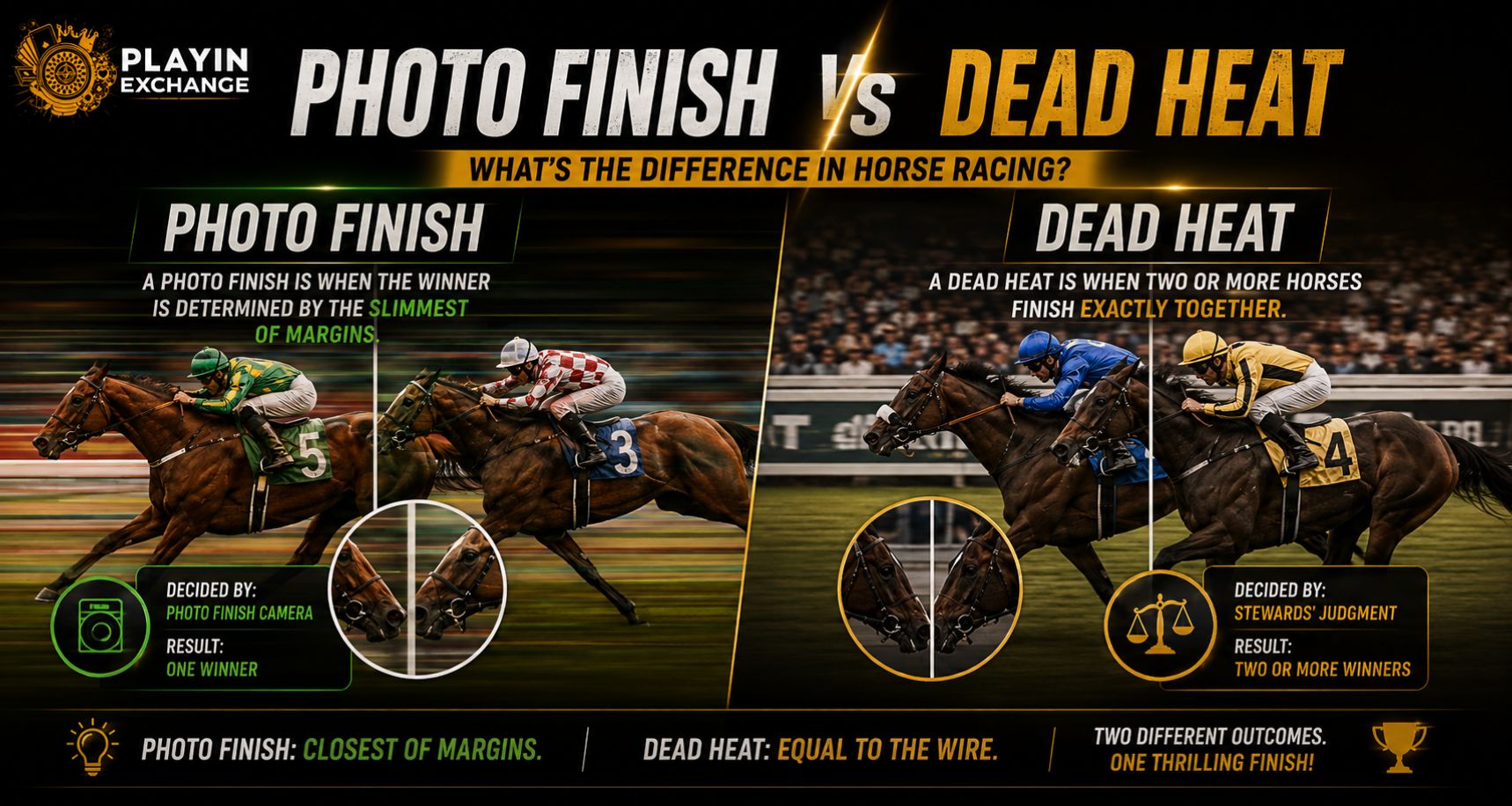
Although both situations involve extremely close finishes, they are not the same. A photo finish requires detailed review to identify the winner, while a dead heat occurs when officials determine that two or more horses cannot be separated after examination.
What Is a Photo Finish in Horse Racing?
A photo finish occurs when horses cross the finishing line so closely that the winner cannot be immediately identified by the naked eye.
In these situations, race officials use specialised camera technology to examine the exact position of each horse at the finish line.
The photo finish process involves:
- High-speed finish-line cameras
- Detailed image analysis
- Review by race officials
- Official confirmation before results are announced
The technology helps determine which horse’s nose reached the line first.
How Does Photo Finish Technology Work?
Modern horse racing uses advanced cameras capable of capturing thousands of images per second. These cameras focus directly on the finishing line rather than taking traditional photographs.
Officials analyse:
- Position of the horses’ noses
- Exact finishing order
- Distance between competitors
- Timing information
Even the smallest advantage can decide the winner. A horse may win by only a few millimetres, making technology essential for accurate results.
What Is a Dead Heat in Horse Racing?
A dead heat occurs when two or more horses finish so closely that officials cannot separate them after reviewing all available evidence.
Instead of selecting one winner, the race result is declared as a tie between the horses involved.
A dead heat can happen when:
- Horses cross the line at exactly the same time
- Finish-line evidence cannot identify a clear winner
- The margin is too small to determine separation
In such cases, all tied horses share the winning position.
Photo Finish vs Dead Heat: Key Difference
The main difference between a photo finish and a dead heat is whether a winner can be identified.
Photo Finish
- Close race requiring technology review
- One clear winner is determined
- Result depends on camera evidence
- Finishing order is confirmed after analysis
Dead Heat
- No clear winner can be separated
- Multiple horses share the same position
- Prize distribution may be adjusted
- Result remains a tie
A photo finish solves uncertainty, while a dead heat confirms that the uncertainty cannot be resolved.
Why Photo Finishes Are Important for Fair Results
Horse racing depends heavily on accurate results because finishing positions affect rankings, records, and betting outcomes.
Photo finishes help maintain fairness by ensuring:
- Correct winner identification
- Transparent decision-making
- Reduced human error
- Reliable official results
Without this technology, many close races could lead to disagreements among participants and fans.
How Dead Heat Rules Affect Race Outcomes
When a dead heat is declared, the result is handled according to racing rules. The winning position is shared, and related outcomes are adjusted accordingly.
The impact may include:
- Shared winning records
- Adjusted prize distribution
- Modified settlement calculations
- Different result interpretations
Users reviewing race information through Playinexch Login should understand these rules because close finishes can influence final race outcomes.
Examples of Close Finishing Situations
A race can create different scenarios depending on the distance between horses.
Examples include:
- Horse A finishes slightly ahead: official winner declared
- Two horses cannot be separated: dead heat announced
- Camera review confirms a narrow margin: photo finish result
These situations show why both technology and racing regulations are important.
Role of Technology in Modern Horse Racing
Technology has transformed how racing authorities handle close finishes. Advanced imaging systems provide accurate information and reduce disputes.
Today’s racing relies on:
- High-speed cameras
- Electronic timing systems
- Digital result verification
- Official review procedures
These tools ensure that even the closest races receive fair decisions.
Why Understanding Racing Terms Matters
Knowing the difference between a photo finish and a dead heat helps fans better understand race results and official announcements.
Important terms improve awareness of:
- How winners are selected
- Why delays happen after races
- How close finishes are reviewed
- Why some races produce shared results
Fans exploring racing markets and discussions through Play Exchange can benefit from understanding these concepts before analysing race outcomes.
Final Thoughts
Photo finishes and dead heats both occur during extremely close horse races, but they represent different outcomes. A photo finish uses technology to identify one winner, while a dead heat means no horse can be separated from another after official review.
Understanding these differences helps racing followers interpret results more accurately. Whether tracking race information through a Playinexch ID or following general horse racing updates, knowing the rules behind close finishes adds greater insight into the sport.
FAQs
What is a photo finish in horse racing?
A photo finish occurs when horses finish extremely close and officials use camera technology to determine the winner.
What does dead heat mean in horse racing?
A dead heat means two or more horses finish so closely that officials declare them joint winners.
Does a photo finish always result in a winner?
Yes, a photo finish is used to identify one winner when the result is too close to determine visually.
How are dead heat results handled?
Dead heat results usually involve shared positions and adjusted prize or settlement calculations.
Why is technology important in horse racing finishes?
Technology provides accurate results, reduces human error, and ensures fair decisions in close races.